|
Markers indicate locations for photos on this page.
Accuracy responsibility of Google Maps
Google Map Goes Here
If you see this text, the map is still loading (or there's an error). |
What all of these questions have in common is the misperception about film (or digital capture) and its purpose. There is no universal truth that slide film is better than negative (print) film, or that Kodak is better than Fuji, or that black and white is better than color film. (Hence, you can also reverse all those comparisons.) Film has an aesthetic quality, each one its own, which you can either like or dislike, just as you can prefer black and white over color photographs, or grainy over smooth images. Some like punched up colors, while others like a smoother, "flatter" feel to their photographs. Some films will achieve your objective more satisfactorily, while the same film may give you undesirable results in other contexts. Remember, whatever you may gain with one film type, you're compromising something else. To get really great colors, you're going to get a lot of contrast. To get the smooth, ultra-detailed look, you're going to lose contrast and color saturation. To get high detail in the broadest range of light, you're going to lose in image density; and of course, the other way around.
So, while you read this page, the first thing you need to do is dispense with the entire notion that you are going to find the perfect film. That said, there are definite attributes to film that do affect people's perceptions positively and negatively, which is really what the education process is all about. Most people don't know what those are, and often misattribute their "bad" pictures to factors other than film, just as they fail to realize what kinds of film are actually giving them more of their desired results. The classic example of this is the belief that "faster" film—like ISO 200 and 400—is better for low-light photography. Surprised? That's why you're reading this article. By learning the facts about film and how it works and why, you can then make better, more informed choices about what kind of film you want.
As discussed in all the introductory sections of each of these chapters,
there are three main technical elements to having a picture come out
well: the proper exposure, the media capturing the light (film type
or digital sensor), and the way the image is presented back to the eye
(print, computer monitor, or direct visual examination on a lightboard).
You may have exposed a picture well, but if you don't use good film,
or print it poorly, then you may still end up with a bad picture.
Because of this, I highly suggest you also read my page on Why do some prints just look awful?.
  Latitude
The latitude of a film indicates the range of light (from darkest to brightest) that can be accurately captured. The further out from that range on either side of darkness or lightness you get, the less detail you'll see in the final image. This is why you may see fuzziness or lots of graininess in the darker shadows of a picture, or why the really bright spots just seem to "white out" into nothingness. These are because the film cannot capture the light across the entire spectrum of brightness that includes both these levels.
All film captures light to some degree. The more limited the film's
range, the less it can capture extremely bright and dark areas in the
same scene. However, this is usually offset by having a very brilliant
and accurate density in the film, which can render extremely sharp and
beautiful images with smooth texture and grain. These often yield a very
realistic and pleasing look. Another advantage is that colors tend to be
much more saturated (for color film), or more "contrasty" (for black and
white as well as color film). This tends to result in a bigger "punch"
to the image. On the other hand, films that have a broad latitude
can capture a more extended range of light, which may be beneficial for
showing detail in both highlights and shadows, but those colors will be
a little more muted, and the film itself tends to be a lot more grainy.
This isn't necessarily bad—it's a matter of taste.
Print films—traditionally called "negative films"—tend to be lower contrast (again, there are exceptions), so they can capture detail from a broader range of light. While this is often an advantage, they suffer the corresponding disadvantages (also discussed in the previous section). "Negative film" is called such because its emulsion reveals a reverse image of the picture. The blacks are captured as white, and the whites are captured as black. Similarly, color negative film reverses colors as well. In order to "see" the picture, you can't hold it up to the light like slide film can because it's a "negative" image. Prints have to be made by exposing light through the negative film onto photo paper that also responds to light negatively. Hence, the blacks and whites are reversed (again), and the image is rendered as its original state.
Some people shoot both negative film and slide film, often carrying two cameras to take pictures with each. However, this is usually inconvenient, and the logistical management of different types of film can be burdonsome. (The storage alone can be a nightmare.) Usually, photographers find the type of film that suits their shooting style and needs, and end up using one or the other. For a discussion on the films I use, see the page on Photography Equipment. One more note about print film: it's much easier and less expensive to make prints from negatives (print film) than it is slide film. Most photo labs will make enlargements for pennies compared to the cost and time of enlarging slides. However, slides can produce amazingly gorgeous prints that negative film can't approach easily. At the high end of printing, there are advantages to each kind of film. Don't sweat it. To answer the question burning on your mind: professionals that use slide film do so because it tends to be better quality: sharper, clearer, more dense, and can be viewed and managed (archives, etc.) far more easily than negative film. Pros that use negative film tend to be more in fashion photography, commercial product assignments, portraiture, or deal with consumers more often. Obvioiusly, there are many exceptions to this rule, so it's hard to say it's a "rule" as much as a general observation. Art Photographers is an entirely different subject, but certainly a legitimate one, also have a fondness for Black and White film. I do too, but for the practical reasons noted above (due to my shooting circumstances), I tend not to use it very much. However, when I do, negative film tends to be better for this. The reasons are beyond the scope of this discussion.
 Film Speed
The next issue with choosing film type is which film speed. Most film companies actively promote 200 speed film to consumers, although you can buy films that range from 100 to 800 speed at most places that sell film. The higher the number, the "faster" the film, which is means that a picture can be captured with very quick shutter speeds, allowing you to take pictures in lower light, or not worry about hand-shake blurring your photos. Sadly, the side effect of higher speed films like this is that they tend to be more washed out and grainy. Most people that aren't happy with how their prints look are usually using higher speed films. This is often the reason for "hazy" pictures, or why you see the grain on pictures when you expected to see a smooth, fine look, or why the colors are muted and ugly, not to mention totally inaccurate. While the person in the image may not be blurry because the shutter speed was fast enough to avoid hand-shake blur or the person moving himself, it's a poor trade-off for having a really bad picture that you can't enjoy anyway.
Oddly (and fortunately), lower speed films are not only better,
but they're considerably less expensive. (This is because the film
companies tend to market the higher speed films to get consumers to buy
them at considerably higher profit margins.) Any time I convince someone
to buy 100 speed film, they have always said how much better their pictures
looked. Yes, you may be limited in that you can't shoot inside a building
at night because there isn't enough light, but if you did it using a faster
film, you probably wouldn't like the picture anyway. If you're going to use
a flash, then it's all a moot point anyway.
Storing film in a hot car in the summer will probably ruin most film in a few days for most film types, or even a few hours for very fine-grained pro films. The visual effects of expired film vary. I've used some film years past its expiration date and had no color shift at all, whereas other film types lose their qualities quickly. Effects of film breakdown are more visible in higher-speed films than lower because grains are bigger and more responsive to light. So, any shifts in that responsiveness will be more apparent. The most common effect is the color skews towards the green because it's the green emulsion on the film itself that is most stable and less likely to alter from the heat. Red and blue emulsions break down faster than the green, which is more stable. So, you tend to see expired films have a greenish hue to them. (This is why they are often called, "green film.") Black and white films don't shift in color, of course. They just get "foggy."
The colder the film, the slower the process.
If you freeze film, the breakdown is halted. Unfreeze it, and it starts
again. Freeze it again, and it's halted again. It doesn't hurt to freeze
and defrost. Refrigeration is as good as freezing, and perhaps somehwat
more convenient, since you can use it "immediately" after taking it out
of the fridge. If you freeze film, you have to let it defrost before
you use it because it can be too brittle for the winder in the camera.
There are no other bad effects of freezing film.
 Push and Pull Processing
Altering processing times—also called "push processing" or "pull processing"—are alternative ways to develop film for purposes of adjusting for light conditions where your camera and film were not capable of dealing with. For example, say you're in a room whose lighting are such that your camera indicates a shutter speed of 1/15 second. For many people, that'd be too slow to hand-hold. If you didn't have a flash (or, more smartly, didn't want to use one), and didn't have a tripod to use, you'd be forced to either forgo the picture, or risk getting a blurry shot. Another option is to "push" the film by a stop (or two).
The concept is extraordinarily simple: you shoot with "twice" the amount
of light, so you "double" the developing time in the film. (Well, you
don't double the develpoing time, the photo lab does.) This is called
"push processing." When you shoot with half the amount of light, you
"half" the developing time in the film. That's "pull processing." When
you double the exposure time, you double the amount of light.
So, all these shots will appear as equivalent pictures:
By setting the ISO to 200 from 100, the camera thinks the film is faster, so it's not adjusting the time at all. It's just shooting at 200, and that accurate light reading for 200 is 1/30 of a second. Sounds good, right? Well, there are caveats to consider. First, processing film involves the lab dunking the entire roll of film into the chemicles, so if you double the time that the film is in the vat, you affect every frame on the roll. You can't selectively choose which pictures are pushed. If this is so simple, why not always push process film? First, film is made to respond to light in a way that yields an accurate representation of what it sees. (Some films are better than others at this.) When you adjust the developing time in push or pull processing, you're sort of messing with that color calibration, and no all films do well like this. Colors begin to "shift" (such as towards the greens). Also the grain of the film accentuates, making for unpleasing affects. Lastly, push processing can be expensive—it's an alteration of the normal development process, and labs usually charge extra for this because they have to do your film separately from others.
While I rarely do it, you can also "pull process"—that is, "slow down"
the film from (for example) 100 ASA to 50 ASA. The effects are often
opposite: more contrast, more color saturation, and less film grain.
Many people find this an advantage in principle, but most films aren't
designed to react to the development times so well, so don't expect
dramatic results. I'll leave it as an exercize to the reader to determine
the conditions where these features could be advantageous. Also, these
are often artistic choices, not necessarily "photo secrets" that you
can use anytime. There are pros can cons to alternative processing,
and you can lose just as easily as you can win here.
Many of you may be wondering about digital photography. And I realize it's hard to talk about film without mentioning it. However, it's not in the scope of this section, so you should go to What Camera Should I Buy? (Part 2) for a more complete discussion.
Click to recommend this page: |
|
 I wrote this article way back when I used to shoot nothing but film. I
updated it once for the introduction of digital photography, but haven't
really touched it since then. Accordingly, the reader should know that
I no longer shoot with film, nor have I since 2002. While many people
still feel film is appropriate for them (and I was just such a laggard
as well into the digital era), today's digital sensors are such that
film's role in most people's photo hobbies (and careers) is minimal.
Those who really do need it, know it absolutely, and have nothing new
to learn here (or anywhere). However, if you are learning, or have any
questions whatsoever on whether to shoot digital or film, I strongly
suggest you look into digital photography. You can read most any of
the other articles on my site about this subject. To read what I use,
see
I wrote this article way back when I used to shoot nothing but film. I
updated it once for the introduction of digital photography, but haven't
really touched it since then. Accordingly, the reader should know that
I no longer shoot with film, nor have I since 2002. While many people
still feel film is appropriate for them (and I was just such a laggard
as well into the digital era), today's digital sensors are such that
film's role in most people's photo hobbies (and careers) is minimal.
Those who really do need it, know it absolutely, and have nothing new
to learn here (or anywhere). However, if you are learning, or have any
questions whatsoever on whether to shoot digital or film, I strongly
suggest you look into digital photography. You can read most any of
the other articles on my site about this subject. To read what I use,
see 

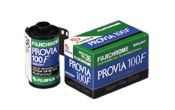
 Two Film Types
 Film Storage
 What I Use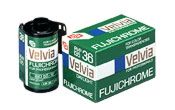
 Digital Capture